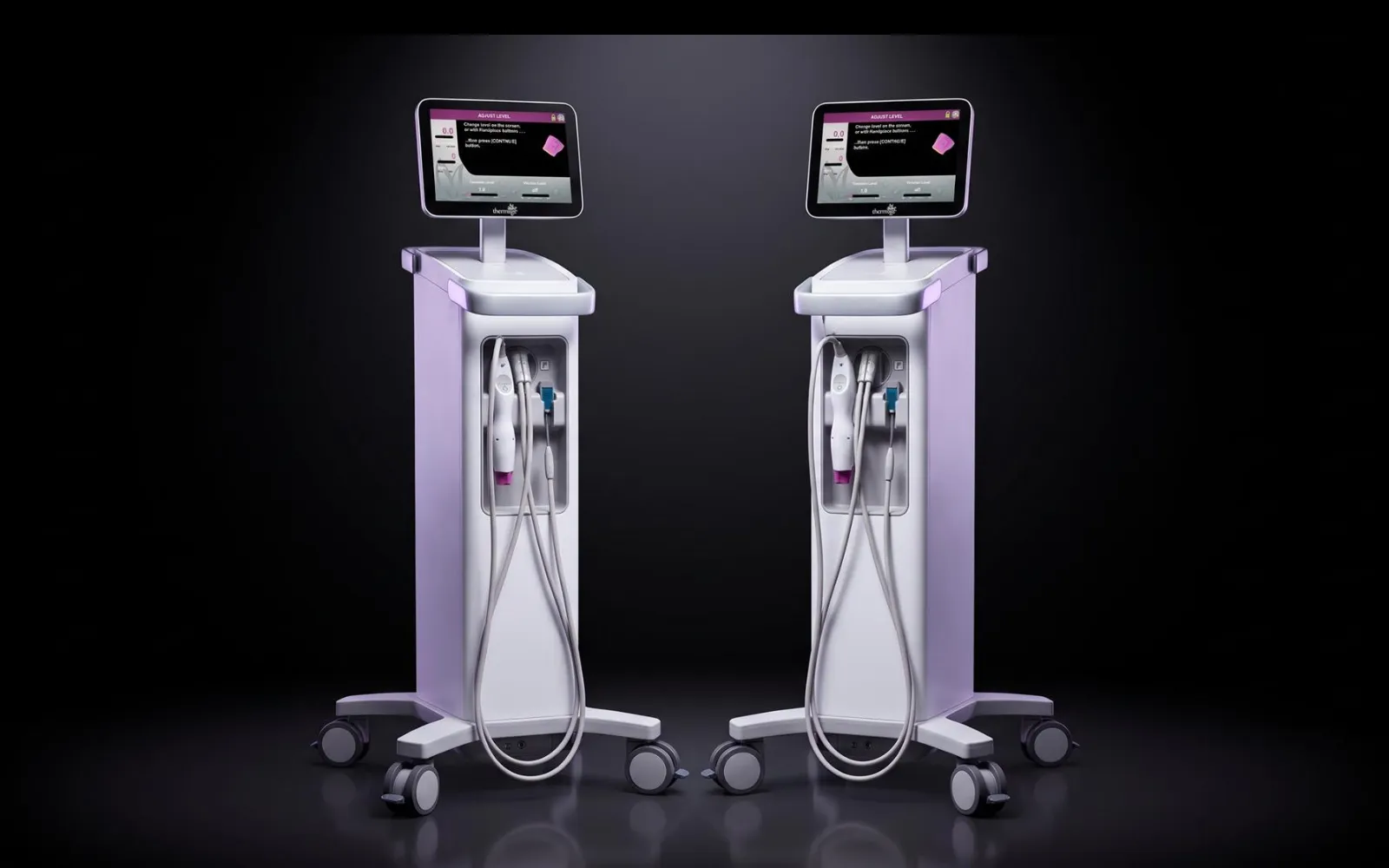
Thermage FLX vs Ultherapy: How They Differ and Which Suits You
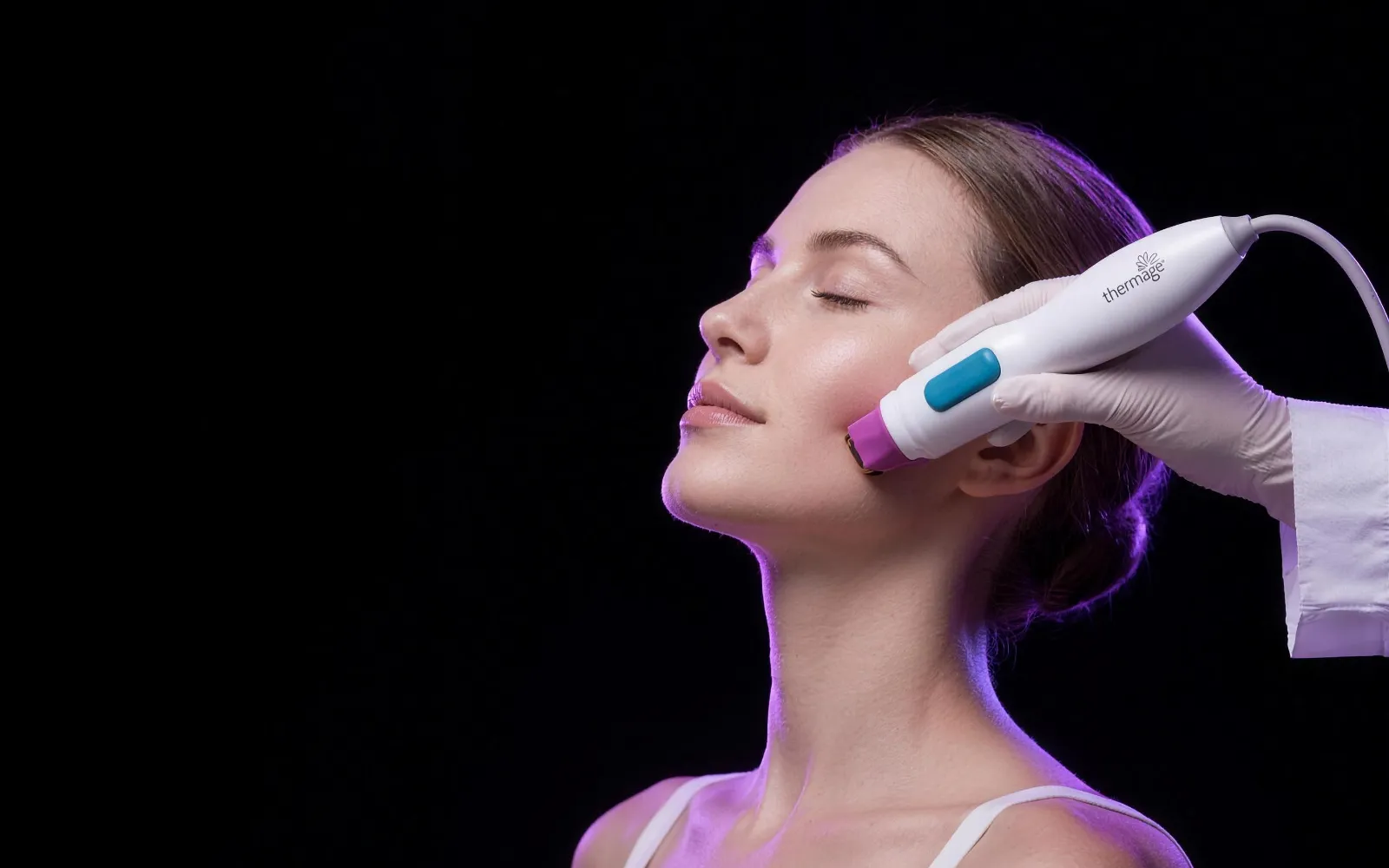
Thermage FLX vs Ultherapy: which one is right for you? Both are well-known non-surgical skin tightening treatments in Seoul, but they work very differently — and that difference matters for safety, comfort and how your face looks months later. This guide compares them side by side, and explains why our clinic chose Thermage FLX.
International patients often ask us:
“Is Thermage or Ultherapy better?”
“What is the difference between Thermage and Ultherapy?”
“Which one hurts less?”
The short answer: Thermage FLX uses radiofrequency (RF) energy to heat a broad, even layer of the dermis and the fibrous septa beneath it, firming the skin and improving texture across the whole face, eyes and neck in a single session — without targeting the deep fat layer. Ultherapy uses focused ultrasound to place concentrated heat points deep under the skin, down to the SMAS, which can carry a risk of unwanted fat loss. For most faces, and especially for patients who travel to Seoul for one visit, we believe Thermage FLX is the safer and more reliable choice. That is why our clinic specializes in Thermage FLX.
What is Thermage FLX?
Thermage FLX, made by Solta Medical, is a monopolar radiofrequency treatment. It delivers controlled heat into the deep dermis and the fibrous septa of the fat layer while the surface is protected by built-in cooling. Collagen contracts straight away and then renews over the following months. At our clinic, most patients feel the full effect after about 2 to 3 months, and the collagen renewal effect lasts about 6 months to 1 year.
Thermage FLX is used across the face, around the eyes and on the neck, and is known for improving firmness, fine lines and overall skin quality at the same time.
What is Ultherapy?
Ultherapy, made by Merz Aesthetics, uses micro-focused ultrasound with visualization (MFU-V). According to the manufacturer and published reviews, it places small, precise heat points at set depths — about 1.5mm, 3.0mm and 4.5mm, the deepest reaching the SMAS layer that surgeons work on in a facelift. In the US it is FDA-cleared to lift the brow, neck and under-chin area and to improve lines on the chest.
The built-in ultrasound imaging lets the practitioner see the layers before delivering energy. Because the energy is concentrated into small points at depth, the result depends heavily on the face and the settings — and on a thin or low-fat face, deep heat can reduce facial volume rather than lift.
Thermage vs Ultherapy: what is the difference?

| Thermage FLX | Ultherapy | |
|---|---|---|
| Energy | Monopolar radiofrequency | Micro-focused ultrasound |
| How heat is delivered | A broad, even layer of heat | Tiny heat points at set depths |
| Main layers | Deep dermis and fibrous septa | Dermis down to the SMAS |
| Known for | Firmness, fine lines and skin quality across face, eyes and neck | Deep-focused lifting of the brow and under-chin |
| Around the eyes | Commonly treated | Brow lift area |
| Comfort | Pulses of heat with cooling; Painless Option available at our clinic | Often described as a deep, sharp ache; sedation is common |
| Risk of fat loss | Does not target the fat layer | Possible, as heat reaches deep layers |
| Suited to a one-visit trip | Yes — designed to work after one session | Harder to follow up if changes appear later |
| Offered at our clinic | Yes — our signature treatment | No |
Thermage results and recovery are based on our clinic’s guide. Ultherapy details are based on the manufacturer and published reviews. Individual results vary.
Thermage vs Ultherapy: which is better for my concern?

Loose, crepey skin and fine lines across the face
Thermage FLX is often the natural choice, because it heats a broad, even layer and improves firmness and texture at the same time.
Around the eyes
Thermage FLX is commonly used around the eyes and on the eyelid area, where the skin is thin.
A heavy lower face or jowls
Deep-focused lifting such as Ultherapy is often suggested here, but it also carries the risk of fat loss, which can make the lower face look hollow. Thermage FLX firms the skin over the whole area without targeting the fat layer, and Dr. Hwang adjusts the energy zone by zone for heavier areas.
Skin quality as well as firmness
Thermage FLX with Rejuran HB plus on the same day is our most chosen combination — Thermage firms the deeper layers, Rejuran refines the skin itself. See Thermage and Rejuran on the Same Day.
When you visit, Dr. Hwang examines your skin in person and recommends the plan that suits your face.
Why does The H Faceup Clinic use Thermage FLX instead of Ultherapy?
This is a deliberate choice, and it comes down to two things: safety and follow-up.
The risk of fat loss
Ultherapy places focused heat points deep under the skin, down to the SMAS layer. Depending on the face and the settings, this can cause unwanted loss of facial fat — which can leave the face looking hollow or older rather than lifted. Once facial volume is lost, it is not easy to restore. We do not use Ultherapy for this reason.
Patients who travel from abroad cannot come back for regular follow-up
Many of our patients fly in from overseas for a single visit. If an unexpected change appears weeks later, they cannot easily return to Seoul for a check-up or correction. For these patients, we choose the treatment we trust most to be both safe and effective in one visit.
That is why we specialize in Thermage FLX
Thermage FLX heats a broad, even layer of the dermis rather than concentrating energy into deep points, and it is designed to work after a single session. Dr. Hwang has performed 4,614 Thermage FLX treatments personally (as of September 2026) — and for international patients in particular, we believe it is the safest and most effective way to firm the skin in one visit.
Which hurts more, Thermage or Ultherapy?
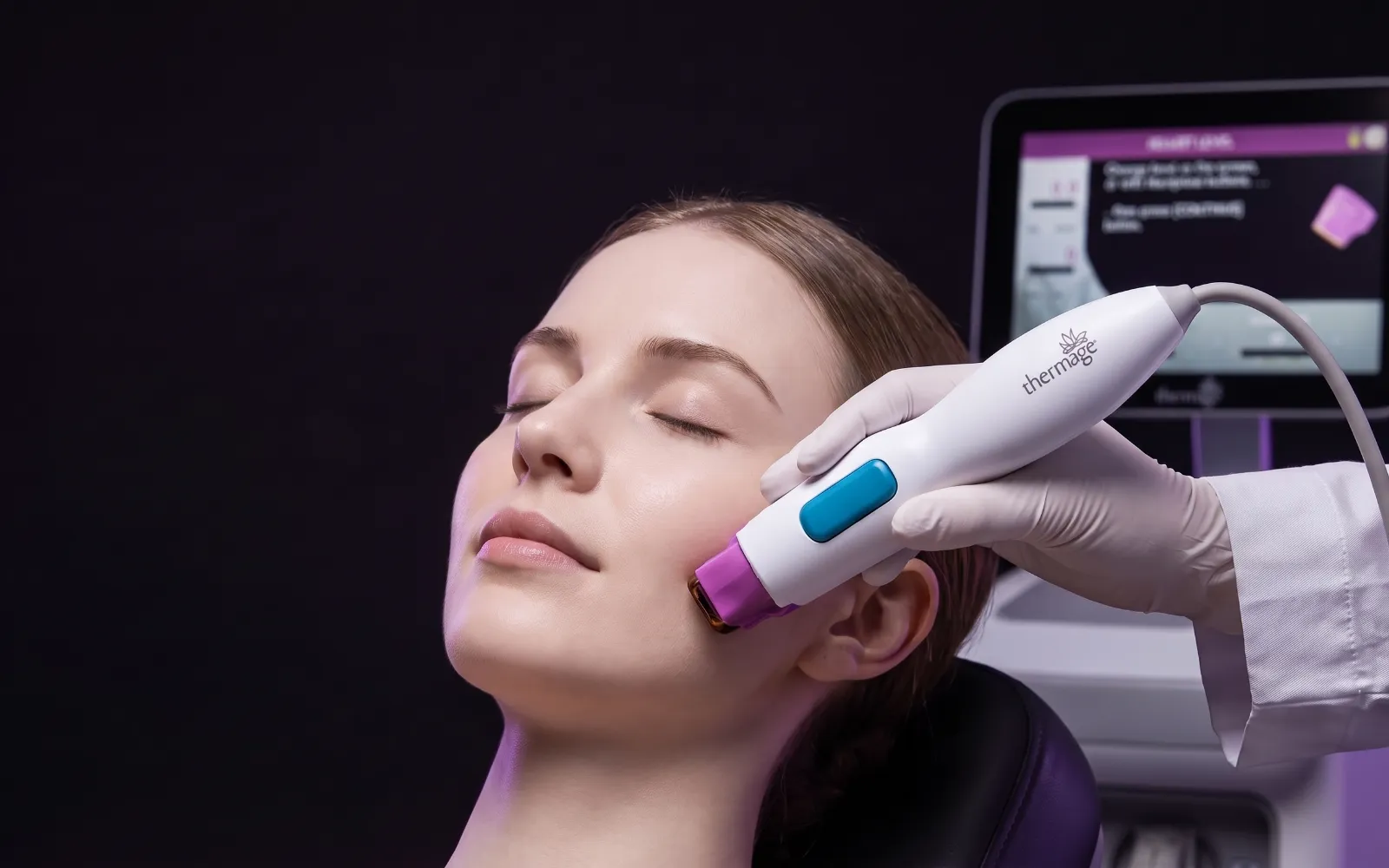
In the Thermage vs Ultherapy comparison, comfort is a common question. Ultherapy is often described as a deep, sharp, bone-level ache because the energy is concentrated into small points — many clinics use sedation or strong pain relief for it. Thermage FLX delivers pulses of heat with built-in cooling and vibration that protect the surface and ease discomfort.
At our clinic, Thermage is performed without sleep sedation, as the manufacturer recommends, so the energy can be adjusted to your response. For extra comfort, our Painless Option — Dr. Hwang’s own technique — keeps the energy your skin needs while reducing discomfort.
How long do the results last?
Both treatments work by renewing collagen, so results build gradually rather than appearing overnight. For Thermage FLX, our clinic guidance is that most patients feel the full effect after about 2 to 3 months, and the collagen renewal effect lasts about 6 months to 1 year. Ultherapy’s manufacturer describes results that can last up to a year or more. Read more in our Thermage FLX results timeline.
Thermage vs Ultherapy: frequently asked questions
What is the main difference between Thermage and Ultherapy?
Thermage FLX uses radiofrequency to heat a broad, even layer of the dermis. Ultherapy uses focused ultrasound to place small heat points at set depths, including the SMAS.
Is Thermage or Ultherapy better?
For most patients — and especially for those visiting from abroad — we recommend Thermage FLX: it firms the skin and improves texture across the face, eyes and neck in one session, without the risk of fat loss that comes with deep-focused ultrasound.
Which is better around the eyes?
Thermage FLX is commonly used around the eyes, where the skin is thin.
Do you offer Ultherapy?
No. Because of the risk of unwanted fat loss, and because patients traveling from abroad cannot come back for regular follow-up, we specialize in Thermage FLX, which is safe and effective in one visit. Thermage FLX with Rejuran HB plus is our most chosen combination.
How much is Thermage FLX at your clinic?
Thermage FLX 600 shots is KRW 2,300,000 and 300 shots is KRW 1,500,000, VAT included.
Can I fly home after Thermage?
Yes. Thermage FLX does not stop you from flying. Mild redness or swelling settles within 1 to 2 weeks.
Thermage FLX in Gangnam, by Dr. Hwang
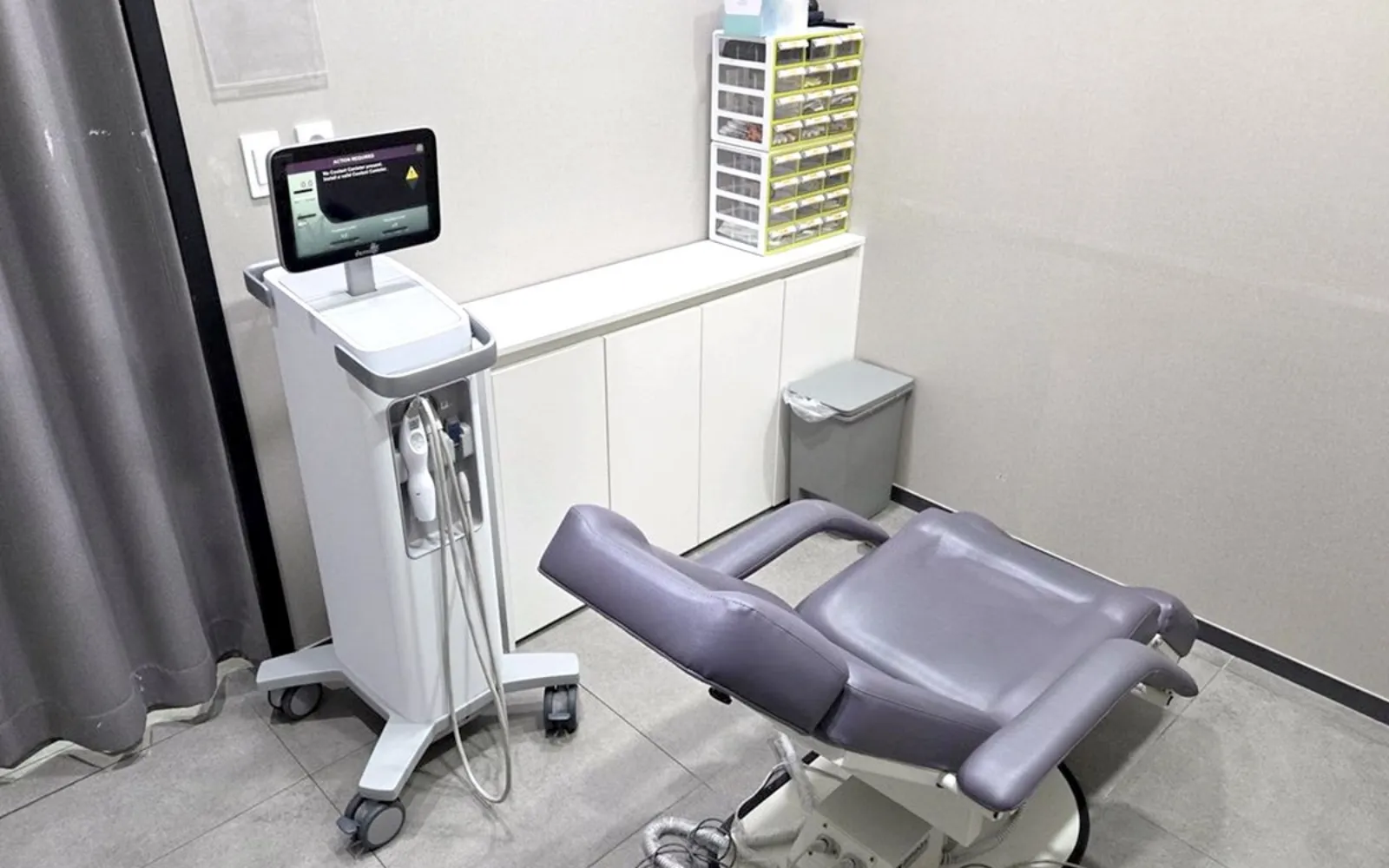
The H Faceup Clinic is a Thermage FLX and Rejuran dermatology clinic in Gangnam, Seoul, and an Official Thermage FLX Anti-Aging Center. Dr. Hwang In-sung, a Thermage FLX Key Doctor, has personally performed 4,614 Thermage FLX treatments (as of September 2026) on two genuine systems. When you visit, Dr. Hwang examines your skin and decides the right treatment with you.
Information and prices as of October 2026. Ultherapy is a trademark of Merz; we do not offer Ultherapy. Results, discomfort and recovery vary between individuals, and the right treatment is decided at an in-person consultation with the doctor. Patients with a cardiac pacemaker or other active implanted device should inform the doctor, as this is a contraindication for Thermage.
Read nextThermage FLX 300 vs 600 shotsThermage FLX price in Korea
Medical review
Dr. Hwang In-sung
Thermage FLX Key Doctor · The H Faceup Clinic, Gangnam, Seoul. Dr. Hwang consults and treats every patient personally, from the first conversation to the final shot.
ReferencesSolta Medical, Thermage® Important Safety Information; Merz Aesthetics, Ultherapy® information; Microfocused Ultrasound With Visualization review, Journal of Cosmetic Dermatology (2025); The H Faceup Clinic Thermage aftercare guide